
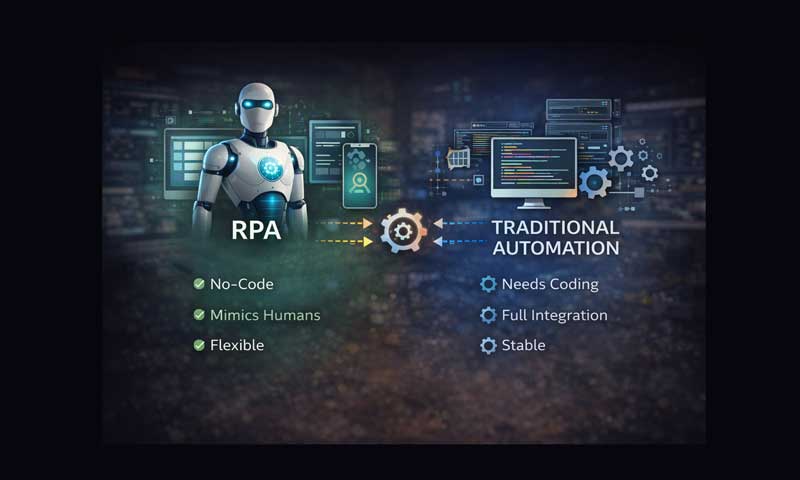
Robotic Process Automation (RPA) has become one of the most popular automation trends in recent years. But is RPA always the best solution? And when is traditional automation through API integrations preferable?
What Is RPA?
RPA consists of software “robots” that mimic human actions: clicking through interfaces, copying data from one window to another, filling forms, sending emails. The robot works with systems the way a human does — through the user interface.
When RPA Is the Right Choice
RPA is ideal when: the system has no API and building one is impossible or too expensive; the process is structured and repetitive; the volume of operations is large but the logic is simple; a quick solution is needed without changing existing systems.
When Traditional Integration Is Better
API integration is preferable when: both systems have or can get APIs; high processing speed and reliability are required; data volumes are large; the process is critical and cannot tolerate errors.
The Hybrid Approach
Most often, combining both approaches is optimal. API integration for the system core and critical processes. RPA for the “last mile” — where legacy systems lack APIs, or as temporary solutions while full integration is being developed.
In our practice, we often start with RPA as a quick solution while simultaneously building full API integration. When the integration is ready, the robot “retires” and the process runs orders of magnitude faster and more reliably.