
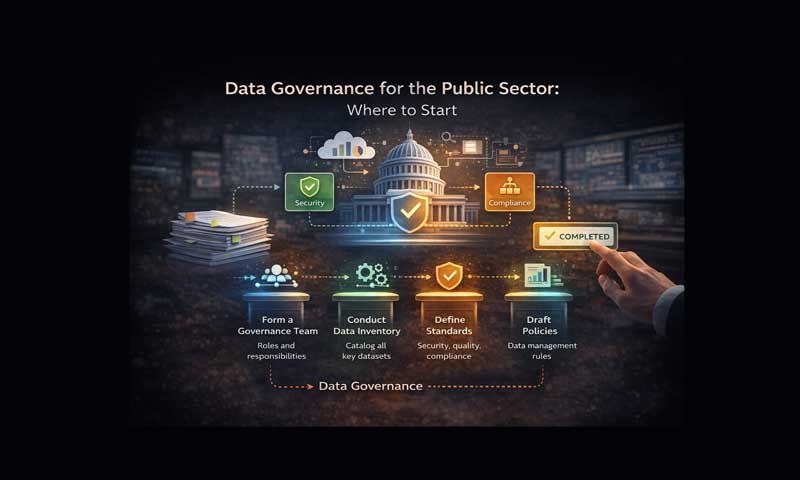
Government organizations operate with massive amounts of data: registries, reference books, reporting, citizens’ personal data. But having data doesn’t mean managing it. Data Governance is a system of rules, roles, and processes that transforms data from a passive resource into a managed asset.
Why Data Governance Is Critical for the Public Sector
The public sector has unique requirements: regulatory compliance, personal data protection, storage and archiving requirements, the need for inter-agency data exchange. Without formalized data management, these requirements are met chaotically or not at all.
Implementation Framework
First level — strategic. Defining data management goals at the leadership level. Appointing a Chief Data Officer or equivalent. Approving Data Policy.
Second level — tactical. Defining data stewards for each data domain. Developing quality standards, classification, and storage. Creating a data catalog.
Third level — operational. Implementing quality monitoring tools, automating checks, reporting on standards compliance.
First Steps
Don’t start by purchasing a tool. Start with an audit: what data exists, where it’s stored, who’s responsible for it, what quality issues exist. This audit often reveals unpleasant surprises — but it’s better to learn about them now than when it’s too late.