
API
Point-to-point integrations: How 'quick fixes' paralyze business
The uncontrolled accumulation of point-to-point integrations creates 'integration spaghetti,' leading to escalating technical debt, operational fragility, and innovation gridlock. This article offers a diagnostic approach to assess risks and justify a transition to a strategic integration architecture.

Integration technical debt: How to avoid business paralysis
Unmanaged integration technical debt leads to increased costs, slowed innovation, and unpredictable outages. Proactive management of this debt is critical for ensuring business agility and competitive advantage.
Data contracts: Ensuring data product reliability in distributed architectures
The increasing complexity of enterprise data demands new approaches to quality and reliability management. Data contracts are a key mechanism for ensuring data consistency and trust in decentralized systems.
MDM without centralization: Defining master system boundaries
Defining the boundaries of master systems is a critical architectural decision for successful MDM. This approach helps avoid excessive centralization and ensures data quality.
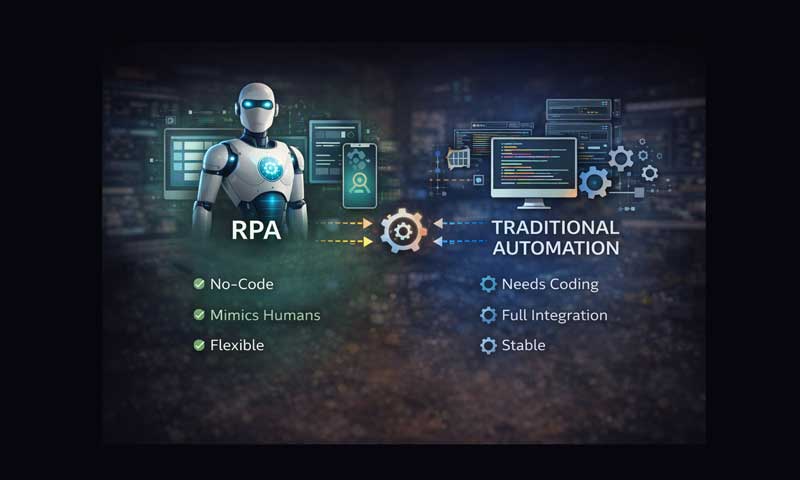
RPA vs Traditional Automation: What to Choose and When to Combine
Comparing RPA and traditional API-based automation: selection criteria and practical scenarios for combining both approaches.
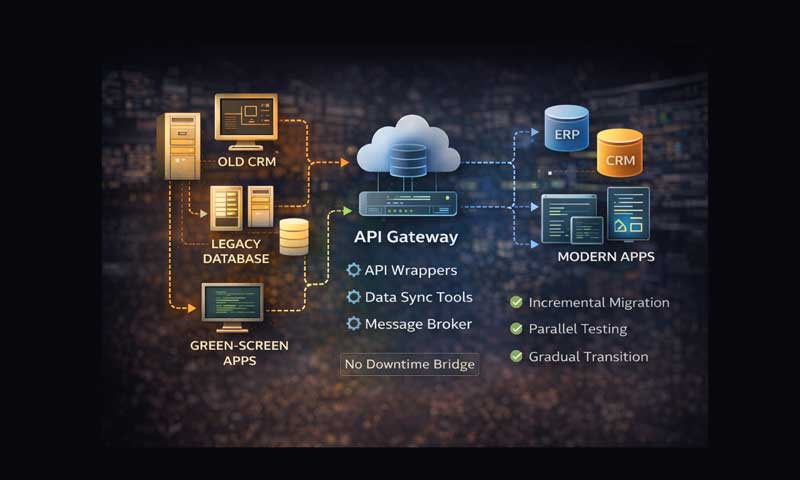
How to Integrate Legacy Systems Without Stopping Business Processes
Strategies for integrating legacy systems with modern solutions: Strangler Fig Pattern, Anti-corruption Layer, and practical migration steps.

API-First Approach: Why Modern Business Runs on Integrations
Why the API-first approach has become the standard for enterprise architecture and how to build an integration strategy that scales.