
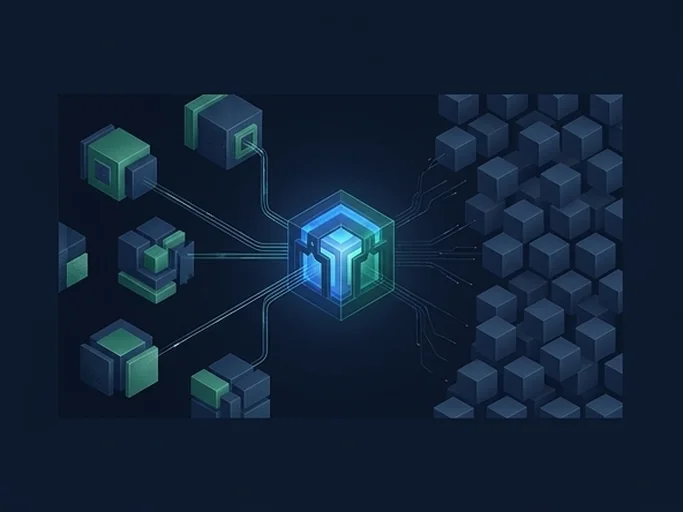
The growth in the number of corporate information systems is accompanied by the problem of data consistency. Enterprises use ERP, CRM, accounting software, electronic document management systems, and specialized industry solutions, each of which may contain its own directories of customers, suppliers, products, and organizational units. As a result, identical objects often have different identifiers, names, and characteristics. This complicates information exchange, creates an additional burden on personnel, and negatively affects the quality of management reporting.
One of the approaches to solving this problem is Master Data Management (MDM) — managing the enterprise’s master data.
What is Master Data Management
Master Data Management is a set of organizational processes, rules, and technological solutions that ensure consistent maintenance of key information objects of the enterprise.
Unlike operational data, which reflects individual business transactions, master data describes relatively stable objects used by many information systems.
These include:
- customers and counterparties;
- suppliers and partners;
- product and service nomenclature;
- the enterprise’s organizational structure;
- production and warehouse facilities;
- classifiers and regulatory reference information.
For example, counterparty information can be used simultaneously in CRM, accounting system, ERP, and electronic document management. Without agreed-upon rules, each system can independently create and modify corresponding records. This leads to the emergence of multiple versions of information about the same object.
MDM allows establishing rules for identification, creation, updating, and distribution of master data between corporate systems.
Why data centralization does not mean creating a single database
One of the common mistakes is the assumption that master data management necessarily requires transferring all corporate directories to a single database.
In reality, MDM can be implemented using various architectural approaches.
Centralized model. Master data is created and modified in a single system, after which it is transferred to other corporate applications.
Registry model. A central system stores identifiers and relationships between records, which physically remain in different sources.
Consolidation model. Information comes from multiple systems, undergoes cleaning and matching, after which a consistent representation of the object is formed.
Hybrid model. Combines centralized management of individual data categories with the possibility of their local use and updating according to established rules.
The choice of architecture depends on the number of information systems, the specifics of business processes, and the requirements for information relevance.
Problem of Duplicating Corporate Objects
Consider an example of an enterprise that has several territorial divisions.
Each division independently maintains its client directory. The same customer can be registered under different names, and their contact details may differ. When generating a company-wide report, the system may mistakenly perceive these records as information about different clients.
As a result, the enterprise receives distorted sales figures and cannot reliably assess the overall volume of cooperation with a specific counterparty.
MDM technologies involve creating mechanisms for record matching, determining their belonging to a single object, and forming a consistent representation.
For this purpose, unique identifiers, data validation rules, and similar record search algorithms can be used.
Particular importance is attached to the control of automatic information merging, as the erroneous matching of different legal entities can lead to serious consequences.
Data Quality and Responsibility for its Maintenance
The technological implementation of MDM will not yield the desired results without organizational rules. The enterprise must define which departments are responsible for managing specific information categories and who has the authority to create, modify, or delete records.
For example, the creation of a new counterparty may be initiated by the sales department, but the verification of legal details will be performed by the accounting or legal department. It is advisable to establish appropriate approval procedures for such operations.
It is also important to define:
- mandatory attributes for each type of information object;
- rules for validating entered values;
- procedures for detecting and resolving duplicates;
- responsibility for information accuracy;
- change control mechanisms;
- procedures for correcting erroneous records.
Thus, MDM is not only a software technology but also a component of corporate information management policy.
MDM Integration with Corporate Systems
The Master Data Management system should interact with other components of the information infrastructure. Web services, messaging mechanisms, enterprise service buses, and ETL procedures can be used for this purpose.
It is important to ensure correct information synchronization, conflict control, and the ability to track change history. Integration of MDM with electronic document management systems plays a significant role.
For example, when registering a new contract, the system should use reliable information about the counterparty, rather than creating an independent record that will later have to be reconciled with the accounting system.
Alignment of master data with document creation and approval procedures is an important condition for building a cohesive enterprise information architecture.
Infrastructure for Master Data Management Systems
MDM can become a critically important component of the corporate IT infrastructure. If dozens of information systems use a single directory, a disruption in its availability can affect the execution of many business processes.
Therefore, during design, it is necessary to consider requirements for performance, backup, fault tolerance, and information security.
Softline IT’s (Softline IT LLC) infrastructure competencies in the field of server solutions, corporate networks, and data storage systems complement the task of building reliable information platforms. Special attention can be paid to the use of virtualization and cloud technologies.
Cloud integration services, which are part of SL Global Service’s (SL Global Service LLC) competencies, are relevant for enterprises considering hosting individual information infrastructure components in remote data centers.
However, the decision to use such environments must take into account requirements for availability, information security, and reliability of communication channels.
MDM Implementation Stages
The creation of a master data management system should be carried out gradually. In the first stage, it is necessary to define the list of information objects that are most significant for the enterprise’s operations.
Next, an analysis of information sources, directory structures, and actual data quality is performed. Based on the results of such an analysis, the target architecture, record identification rules, and synchronization mechanisms are determined.
After this, integration components, data cleansing procedures, and data relevance control mechanisms are developed. Special attention should be paid to pilot operation, during which the correctness of record matching and the interaction of MDM with other information systems are verified.
It is advisable to start implementation with a limited number of directories, gradually expanding the platform’s functionality.
Practical Guidelines for Implementation
Master Data Management allows enterprises to move from independent maintenance of corporate directories to consistent management of key information objects.
The use of MDM helps reduce the number of duplicates, improve data quality, and simplify integration between corporate systems.
At the same time, the effectiveness of this approach depends on the correct organization of business processes, the definition of data responsibility, and the reliability of the technological infrastructure.
Master data management is an important component of forming a unified information space of an enterprise and developing a corporate information architecture.

Author